If you picture Fallbrook as one thing, you might miss what makes it so appealing. Some areas feel close to a village setting, while others open up into larger parcels, agricultural land, and estate-style living with room to spread out. If you are considering acreage in Fallbrook, it helps to understand how the area is planned, what varies from parcel to parcel, and what that means for your day-to-day life. Let’s dive in.
Fallbrook's acreage lifestyle
Fallbrook is a 36,000-acre unincorporated community in San Diego County with a long rural and agricultural history. County planning materials describe hills, rivers, streams, forests, open space, and farming, with avocado production playing an important role in the area's identity.
That backdrop matters if you are drawn to land, privacy, and a slower pace. Fallbrook is not being shaped like a compact suburban district. County planning goals emphasize preserving rural charm, low-density development, open space, and agriculture.
Fallbrook is not all large lots
One of the biggest misconceptions about Fallbrook is that every property sits on wide-open acreage. In reality, the village core includes higher-density housing, retail, and light manufacturing, while larger-lot living is more common outside the center in semi-rural and rural areas.
That means your experience can look very different depending on where you focus your search. If you want more land, more separation between homes, or room for agricultural or equestrian uses, your best fit may be outside the village core.
What lot sizes can look like
San Diego County uses different planning designations that shape minimum lot sizes and development patterns. In Semi-Rural areas, the minimum lot size is 0.5 gross acre, while Rural Lands require at least 1 acre.
Inside the village, the pattern is different. The community plan treats 4.3 units per gross acre as roughly quarter-acre lots, with 6,000-square-foot minimums for single-family lots and 5,000-square-foot minimums in planned residential developments.
County mapping also shows a range of acreage-based categories such as SR-1, SR-2, SR-4, SR-10, RL-20, RL-40, and RL-80. In practical terms, estate living around Fallbrook can range from about 1 acre to very large rural holdings, depending on the specific designation on the parcel.
Why acreage does not tell the full story
A larger lot does not automatically mean you can use the land however you want. County zoning separates use, density, lot size, animal regulations, building type, and special-area rules.
Two nearby properties can look similar on paper and still function very differently. One parcel may have better usable land, easier access, or different rules for animals and structures. That is why acreage buyers need a parcel-by-parcel review, not just a quick glance at lot size.
Water and septic matter early
For rural and estate properties, infrastructure is a major part of the buying decision. In some parts of Fallbrook, the Fallbrook Public Utility District and Rainbow Water District provide water and sewer service within their service areas.
Outside those service patterns, wells and septic systems may come into play. County guidance notes that water wells are commonly the only potable water supply in rural San Diego County, and septic systems are regulated to protect groundwater and surface water.
Septic capacity is not a guess. The county states that septic sizing depends on percolation test data and bedroom count, and septic permits can be obtained through the county. Well installation or modification also requires a permit.
Private roads and access can shape daily life
A beautiful parcel can still come with practical challenges. The Fallbrook community plan notes that many private roads serve local properties, and some have maintenance agreements while others do not.
The plan also notes that some of these roads need repair. For you as a buyer, that can affect access, upkeep expectations, and the overall feel of owning rural property.
Emergency access is also part of the picture. The community plan includes a fire access and egress chapter, which highlights how important driveway design and access routes can be on larger rural parcels.
Site conditions can change usable space
Not every acre is equally usable. County planning layers track slopes, floodplains, water source protection areas, fire responsibility areas, and wildfire-related review areas.
These factors can affect grading, drainage, building placement, and how much of the land truly works for your goals. A property may sound large in marketing remarks, but the right question is how much of that land is realistically usable for the way you want to live.
Equestrian and hobby-farm potential
Fallbrook has real appeal if you want a property with agricultural or equestrian potential. The community plan supports combined agriculture and residential uses, light agriculture, equestrian and hiking trails, and riding stables.
The area also includes a Santa Margarita River preserve area with corrals for equestrian use and about 14 miles of continuous hiking and equestrian trails. That reinforces what many buyers already sense when they visit: Fallbrook's rural character is not just visual. It is part of how the community is planned.
Horse property rules are specific
If horses are part of your vision, total acreage alone is not enough. County animal regulations address horsekeeping and horse stables in detail, and what is allowed depends on the property's zoning and animal designator.
In certain animal-designator zones, boarding and riding lessons for up to three horses not owned by the property owner are allowed without a permit. Larger operations depend on usable acreage and may require a Zoning Verification Permit, an Administrative Permit, or a Major Use Permit.
The county also defines usable area for horses in a specific way. It includes areas actually used by horses, such as arenas, corrals, stalls, paddocks, and related structures, but excludes driveways, residences, landscaping, parking, and active agriculture.
Hobby-farm living has limits too
Fallbrook is well suited to lower-intensity agricultural living, but that does not mean every farm-style use fits every parcel. County policy supports agriculture in the community, yet discourages intensive commercial livestock operations and requires buffers between new residential development and existing intensive agricultural uses.
That makes Fallbrook attractive for buyers who want a more hands-on outdoor lifestyle without assuming every livestock-heavy use will be simple or allowed. If your plans go beyond casual gardening, orchards, or light agricultural use, verifying the property's rules becomes even more important.
Village convenience versus rural privacy
Acreage living in Fallbrook often comes with a tradeoff. Compared with a coastal North County suburb, Fallbrook generally offers more privacy and land, but less walkability and more self-management.
That difference shows up in daily routines. You may gain space, views, and separation, while taking on more responsibility for access, land care, utilities, and planning due diligence.
At the same time, the village core is becoming more connected. San Diego County adopted the Fallbrook Sub-Area Plan on December 11, 2024 to support downtown revitalization and improve pedestrian access and mobility, while the outlying areas remain distinctly rural.
What smart buyers verify first
If you are seriously exploring estate or acreage property in Fallbrook, it helps to start with the basics before you get too attached to a listing. A careful review can save time, money, and surprises later.
Here are some of the first items worth checking:
- Lot size and planning designation
- Zoning and allowed uses
- Water source and utility service area
- Septic status or septic feasibility
- Road access and any maintenance agreement
- Driveway and fire access considerations
- Slope, floodplain, and other site constraints
- Horse or agricultural use rules tied to the parcel
What acreage living really means in Fallbrook
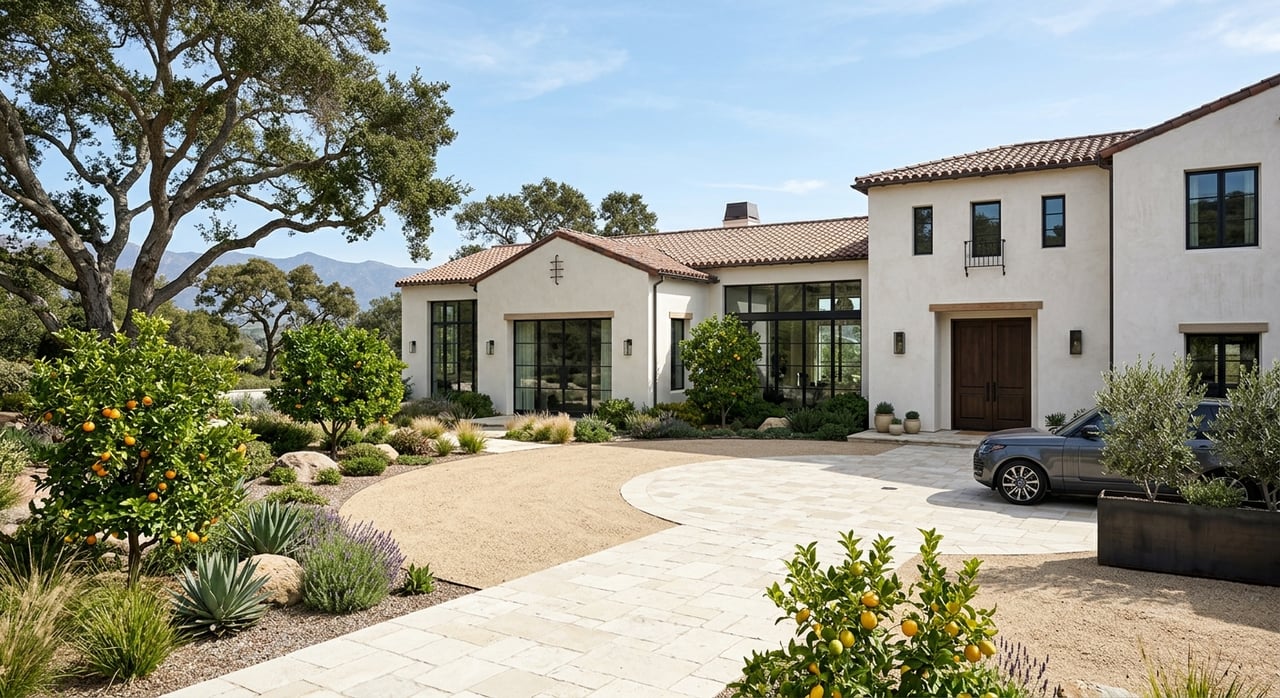
At its best, Fallbrook offers a version of North County living that feels more open, private, and land-oriented than many coastal communities. You may find room for gardens, orchards, horses, workshops, or simply more breathing room between you and your neighbors.
But the smartest way to approach it is with both excitement and discipline. In Fallbrook, the right property is not just about the house or the number of acres. It is about how the land, infrastructure, access, and county rules all work together.
If you are thinking about buying or selling an acreage or estate property in North County San Diego, Colucci & Co. offers the local insight, concierge guidance, and high-touch strategy to help you move with confidence.
FAQs
What does acreage living in Fallbrook usually mean?
- Acreage living in Fallbrook can mean anything from semi-rural lots starting around 0.5 gross acre to much larger rural holdings, depending on the parcel's planning designation and location.
How are estate properties in Fallbrook different from village properties?
- Estate properties in Fallbrook are generally found outside the village core, where larger lots, lower-density development, and rural land uses are more common.
Do Fallbrook acreage properties always have city water and sewer?
- No. Some properties are served by local water and sewer districts within their service areas, while others may rely on wells and septic systems.
What should you check before buying land in Fallbrook?
- You should verify zoning, allowed uses, water source, septic requirements, road access, fire access, and site constraints such as slope or floodplain conditions.
Can you keep horses on a Fallbrook estate property?
- Possibly, but the answer depends on the parcel's zoning, animal designator, and the amount of usable area available for horse-related use.
Is all of a Fallbrook parcel usable for equestrian use?
- No. County rules define horse-usable area narrowly and exclude spaces such as driveways, residences, landscaping, parking, and active agriculture.