Salt air, bright sun, and ocean breezes make Encinitas living special, but they can also dull paint, corrode hardware, and stress thirsty landscapes. If you want a fast, affordable refresh before spring showings, the right coastal materials and low-water design choices can transform your first impression. In this guide, you’ll learn what works in Encinitas’ climate, from salt-air resistant finishes and drought-friendly plant palettes to sleek surf and bike storage and durable lighting. Let’s dive in.
Encinitas climate, expectations, timing
Salt air, sun, and water-wise reality
Encinitas sits in a Mediterranean coastal zone, which means mild, wet winters and dry summers. Marine influence increases humidity and salt spray, which can accelerate metal corrosion and fade paints and fabrics. Average precipitation in San Diego County is roughly 10 to 12 inches per year, so drought-friendly landscapes are a smart, marketable choice. A coastal, lifestyle-driven market also rewards clean lines, neutral palettes, and low-maintenance outdoor spaces.
Permits, HOAs, and timing
Many cosmetic updates like painting, plant swaps, and small storage boxes can be done without permits, but structural changes and electrical work may require approval. Always confirm with the City of Encinitas Development Services and your HOA before you start. Outdoor lighting must align with California Title 24 energy standards, and local water providers often offer rebates for water-wise upgrades. If you plan to list in spring, complete projects by late winter so paint cures, plants establish, and any permits are squared away.
Materials that stand up coastside
Metals and hardware
Salt-heavy air demands corrosion-resistant components. Choose 316 stainless steel for exterior hardware, fasteners, and fittings in exposed areas. It outperforms common 304 stainless in chloride environments. If you need a budget-friendly option, powder-coated aluminum or architectural bronze can hold up well when coatings remain intact. Use stainless or silicon bronze fasteners and avoid bare galvanized metal in high-salt locations.
Paints and protective coatings
Select high-quality 100% acrylic latex exterior paint with strong UV and adhesion ratings. Pair it with the right primer for stucco or masonry to help reduce peeling. For wood trim and doors, use penetrating oil-based finishes or top-tier exterior coatings labeled for coastal or marine exposure. Expect to refinish wood more often near the ocean and schedule touch-ups annually at the entry and sills where wear shows first. On metal elements, marine-grade powder coats or two-part polyurethane top coats provide added longevity.
Decking, fencing, and exterior wood
For decks and trim, capped composite or PVC/HDPE materials resist moisture and reduce maintenance compared to untreated wood. If you prefer real wood, choose durable species like teak or ipe where budget allows. When using railings or visible fasteners, pair them with 316 stainless hardware. Glass or cable railings can look great with the right coastal-grade fittings.
Drought-friendly landscaping that pops
Design moves for low water
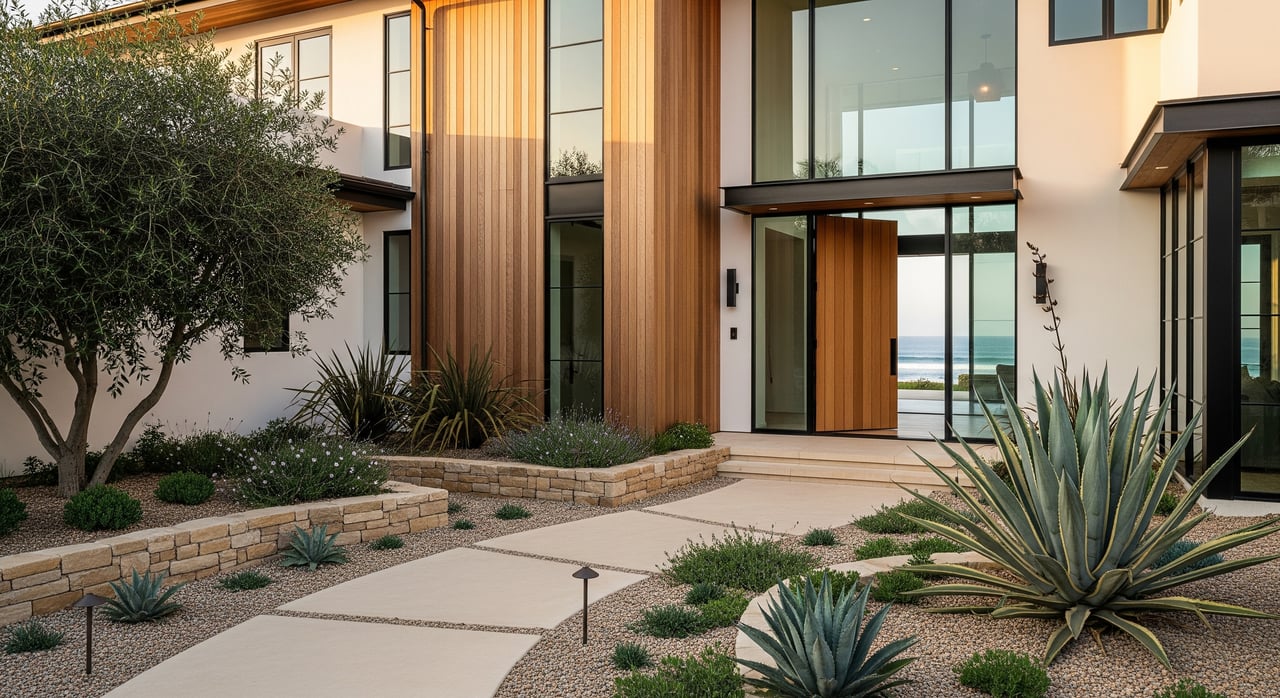
Aim for layered, low-water plantings that tolerate coastal wind and occasional salt spray. Place succulents and groundcovers near walkways, then add medium shrubs for structure. Use permeable hardscape to encourage drainage and reduce heat. Group plants by water needs so your irrigation stays efficient and simple.
Plant list for Encinitas
Try California-friendly plants that thrive along the coast and support pollinators.
- California natives: Ceanothus (California lilac), Arctostaphylos (manzanita), and Salvia varieties for structure and seasonal color.
- Succulents and ornamentals: Dudleya, Agave, and cold-hardy Aloe for sculptural texture.
- Grasses and groundcovers: Muhlenbergia rigens (deer grass), Festuca californica, and Armeria maritima (sea thrift) for movement and pops of color.
- Coastal-tolerant accents: Ornamental olive or small palms in the right microclimate. Avoid water-hungry species that struggle without heavy irrigation.
Irrigation and mulch that work
Convert to drip irrigation where possible and pair it with a smart controller that adjusts for weather and local rules. Use pressure-compensating drip emitters for even watering and consider root-zone irrigation for shrubs and trees. Mulch 2 to 4 inches deep to lock in moisture and reduce salt buildup at the soil surface. Water deeply and infrequently once plants establish to encourage strong root systems.
Hardscape wins
Reduce turf and simplify care with decomposed granite, pea gravel, or permeable pavers. Break up large concrete areas with planting joints or permeable sections for better drainage. Durable containers in fiberglass, HDPE, or glazed ceramic make it easy to refresh the entry seasonally without heavy water use.
Surf and bike storage with style
Storage types and placement
Give buyers the lifestyle they expect with neat, weatherwise storage. Wall-mounted racks for boards and bikes free up floor space and look clean when tucked under eaves. Choose racks with rubberized contact points and 316 stainless hardware. Low-profile HDPE or marine-grade polymer lockers are great for side yards and patios and resist rot and salt. For wetsuits, use ventilated hangers under an overhang or inside a ventilated cabinet to reduce mildew.
Sizing, security, and permits
Plan for 7 to 9 feet of vertical clearance for longboards and 2 to 3 feet of depth for vertically hung bikes. Allow 6 to 8 feet of width per two ground-stand bikes. Select lockable cabinets and anchor them for security. Larger storage structures may require permits or HOA approval, so verify rules before you buy or build.
Make it look intentional
Match finishes to your facade. Powder-coated metal in warm neutrals, teak accents, and weathered-grain composites blend with coastal architecture. Integrate low grasses or a short hedge to screen storage from the street while keeping it visible from the house for security. Built-in benches with lockable lids can double as seating and storage.
Coastal lighting that lasts
Fixture and light specs
Choose wet-location fixtures made from corrosion-resistant materials. Look for an IP rating of IP65 or higher for exposed areas and select sealed LED modules to reduce maintenance and color shift. For curb appeal, warm white 2700 to 3000K provides inviting light with good color rendering. Use timers, motion sensors, and smart controls to improve efficiency and meet California Title 24 requirements.
Placement and maintenance
Light the path to your entry, highlight house numbers, and place low-level step lights for safety. Use gentle uplighting on a specimen plant or small tree for depth. Avoid over-lighting and aim for a layered, subtle look. Plan to clean lens covers and seals periodically to remove salt residue and keep output consistent.
Budget and timeline playbook
You can make a strong first impression at almost any budget. Here is a simple runbook to guide scope and timing.
- 1 to 2 days, under $500: Power wash the entry and walkways, replace front-door hardware and doormat, prune hedges, add potted succulents, and install one or two LED path lights.
- 1 to 2 weeks, $1,000 to $5,000: Repaint the front door or trim with coastal-rated products, add a wall-mounted surf and bike rack, convert a small lawn area to drought-friendly plantings, upgrade to a smart irrigation controller, and swap dated fixtures for sealed LED path or sconce lights.
- 2 to 6 weeks, $5,000 to $20,000+: Refresh the full exterior paint, install composite decking or refinish wood, commission a professional front-yard redesign with low-water plants and drip irrigation, add built-in lockable storage, and layer in professional landscape lighting.
Plan earlier in the year for better plant establishment before summer heat. Check with the San Diego County Water Authority or your local district for potential rebates on turf removal, efficient irrigation, and native plant programs to offset costs.
Quick spring checklist
- Confirm City of Encinitas and HOA rules for planned changes.
- Inspect and replace corroded house numbers, mailbox, and gate hardware.
- Power wash siding, railings, and walkways. Touch up paint or stain at the entry.
- Convert or service drip irrigation and set a weather-based schedule.
- Add coastal-rated, low-voltage LED path and accent lighting.
- Install weather-resistant surf and bike storage and secure it properly.
- Stage with durable containers and drought-friendly plants. Remove rusted or faded items.
Fresh materials, water-wise planting, and small functional upgrades can change how your home feels from the curb in just a few weekends. If you want a tailored prep plan, trusted vendor referrals, or expert staging and marketing before you list, connect with the North County coastal team that treats your home like their own. Book a complimentary consultation with Colucci & Co..
FAQs
What materials resist salt-air corrosion best near the ocean?
- For hardware and fasteners, 316 stainless steel is preferred in exposed coastal areas. Powder-coated aluminum and architectural bronze also perform well when coatings remain intact.
Which drought-tolerant plants handle Encinitas’ coastal conditions?
- California natives like Ceanothus, manzanita, and coastal sages, plus succulents such as Dudleya, Agave, and cold-hardy Aloe, along with grasses like Muhlenbergia and Festuca.
Do I need a permit for front-yard storage or lighting in Encinitas?
- Many small, cosmetic upgrades are permit-free, but larger storage structures and new electrical work can require City and HOA approval. Always verify before starting.
What outdoor lighting specs work best by the coast?
- Choose wet-location fixtures with IP65 or higher, corrosion-resistant finishes, and sealed LEDs. Use warm white 2700 to 3000K for inviting curb appeal and include smart controls.
How much does a small drought-friendly front-yard refresh cost?
- A basic conversion with plants, mulch, and drip irrigation typically ranges from about $2,000 to $8,000, with installation in 1 to 3 weeks and several months for establishment.